
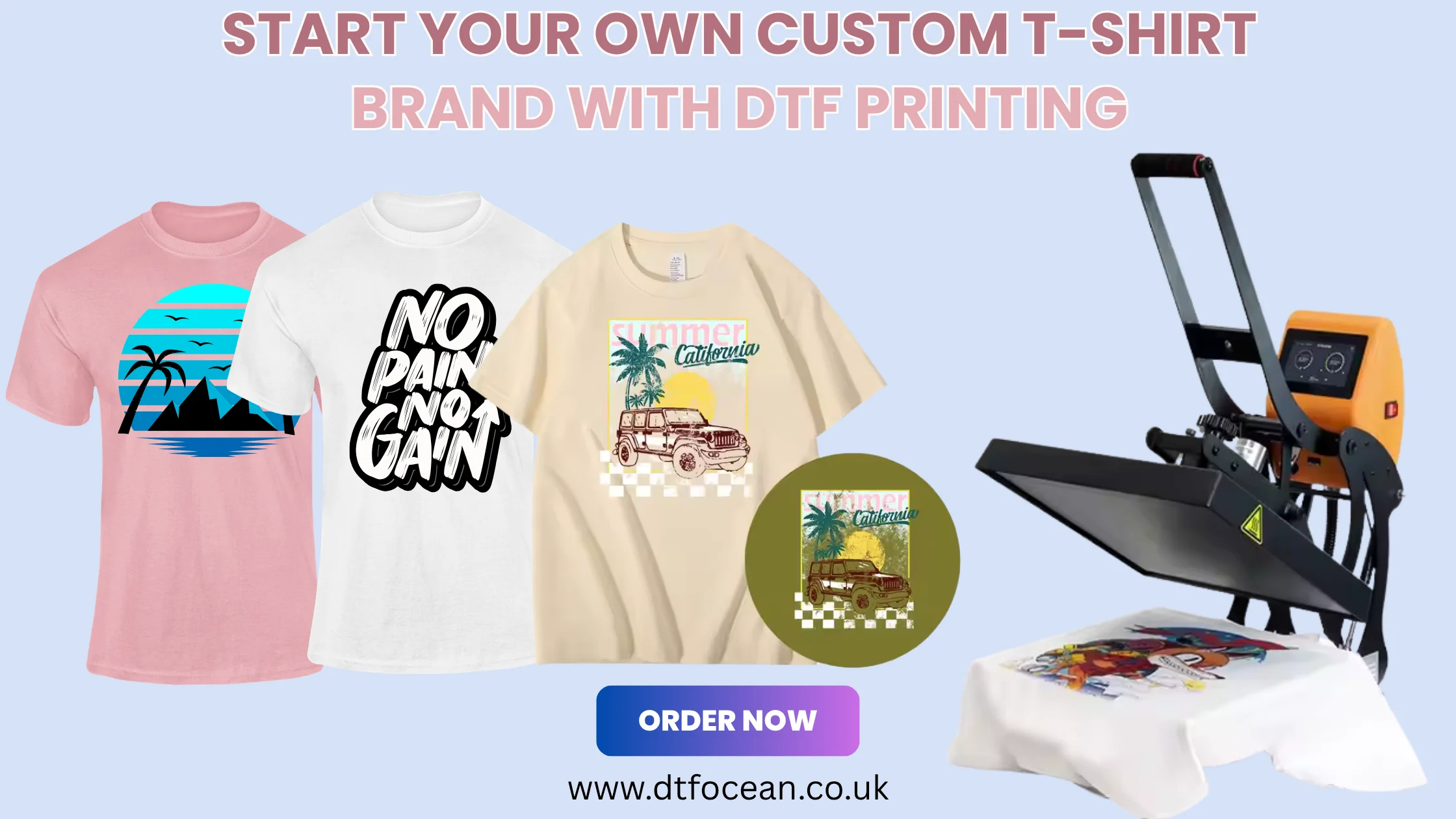
The UK’s demand for personalised fashion, especially custom t-shirts, is booming. Whether it’s streetwear, branded merch, or personalised gifts, there’s never been a better time to start a custom t-shirt business using DTF printing. In this guide, we’ll walk you through how to launch your business from scratch using Direct-to-Film (DTF) technology, which is revolutionising garment printing in the UK.
What is DTF Printing?
DTF (Direct-to-Film) printing is a heat transfer method where designs are printed onto a special film, coated with adhesive powder, and then heat-pressed onto garments. Unlike traditional methods like vinyl or screen printing, DTF allows full-colour, high-resolution prints on any fabric type.
Advantages of DTF Printing
- Works on cotton, polyester, and blends
- No weeding or cutting required
- Vivid, durable prints
- Ideal for short runs and custom orders
- Low setup cost
Step-by-Step: Starting a T-Shirt Printing Business in the UK
1. Conduct Market Research
Before investing in equipment, understand your target audience. Are you aiming for local UK markets like:
- Custom merch for UK bands or influencers?
- Personalised clothing for stag/hen parties?
- Niche humour t-shirts with UK cultural reference
2. Choose a Business Name & Register It
Pick a catchy, memorable name that reflects your brand. Then:
- Register your business with HMRC (for sole traders) or Companies House (for Ltd companies)
- Secure your .co.uk domain name
3. Purchase DTF Printing Equipment (UK Options)
Essential Equipment:
- DTF Printer (A3 or A4, converted Epson printers are common)
- PET film sheets
- Hot melt adhesive powder
- Heat press machine
- Design software (Adobe Illustrator, CorelDRAW, or Canva)
Recommended UK Suppliers:
- CityInkExpress
- Xpres UK
- Ink Expert
4. Set Up Your Workspace
You can start from home, especially if you’re using compact desktop DTF printers. Ensure:
- Good ventilation
- Flat heat press area
- Dry storage for films and garments
5. Create Eye-Catching Designs
Use UK pop culture, humour, and local slang for appeal. Tools like Canva or Adobe Illustrator can help design print-ready artwork. Focus on originality—don’t just rip designs from the web.
6. Print and Press Your First T-Shirts
Here’s how the DTF process works:
- Print your design in reverse on DTF film
- Apply hot melt powder while the print is wet
- Cure the film with a heat press or oven
- Heat press the film onto the garment
- Peel and finish the t-shirt
7. Set Up an Online Store
Options for the UK:
- Shopify or WooCommerce for custom shops
- Etsy UK – great for handmade/personalised goods
- Depop or TikTok Shop UK for younger audiences
8. Market Your Brand
Use UK-specific platforms and strategies:
- Instagram & TikTok with hashtags like #UKStreetwear, #CustomTshirtsUK
- Partner with UK influencers for product reviews
- Run promotions on Facebook Marketplace (UK) or Gumtree
9. Handle Legal & Tax Requirements
- Register for self-assessment with HMRC
- Keep receipts and invoices
- Follow UK consumer laws for returns & refunds
- Consider business insurance (especially public/product liability)
10. Scale Your Business
Once you’ve found a winning formula:
- Add personalisation features (e.g. names, events)
- Expand into hoodies, tote bags, and baby grows
- Hire staff or outsource for production
Common Mistakes to Avoid
- Using low-quality DTF film or powder
- Undercharging for custom work
- Copying popular brands (IP infringement)
- Skipping test prints
Starting a custom t-shirt business with DTF printing in the UK is an exciting, affordable way to tap into the booming personalised apparel market. With the right tools, niche, and localised marketing, you can turn your side hustle into a profitable venture.
Related: Understanding Wholesale Pricing: A Guide for B2B Clothing Retailers
